viernes, 25 de marzo de 2011

Electricity and the Modern World

Hace unos meses les hablé de los 20 logros más sobresalientes de la ingeniería, en los cuales la ''Electrificación'' tuvo el merecido mérito de ser el logro más importante del siglo pasado.

Hoy les hablaré (en un interesante artículo que escribí para una clase de inglés) un poco más sobre lo que es la electrificación y las razones por las ha cambiado (y sigue cambiando) nuestro mundo.


Electricity and the Modern World


      As time progresses, some inventions become ordinary items of our daily life, forgetting how different life was before they were invented.  People of the next or ‘’upcoming’’ generation will probably consider having a computer or an iPod as usual as of how other generations considered having a Television or a refrigerator, without taking in consideration some of the greatest achievements that made our ordinary life as comfortable as we know it. Out of those achievements, there’s one that needs to be always remembered, one that not only revolutionized the way we live, but one that also opened a path to other great inventions, a path that would have never been crossed or even considered, that changed in a dramatically good way everything we do: from taking classes to cooking or working. The achievement we are about to discuss  changed us humans in a way that not only made us forget about our uncomfortable past, but that also keeps allowing us to technologically evolve. The achievement of efficiently supplying electricity anywhere in this planet (or Electrification) is considered the greatest Engineer achievement of the century, a title that I consider not enough for the invention and should be changed to the greatest achievement of all times. I’ll explain why taking in consideration three main subjects: the immediate effects of electrification, some of its applications and a comparison of how life was before and how it is now after the global production of electricity.


      After the "Current Wars", which was a dispute between Edison’s Direct Current and Tesla's Alternate Current, in which Tesla's side was favored for it's cheap distribution, everything around the world was about to change in a matter of years. Light bulbs were about to be used everywhere around the globe, offering people an alternate source of light in their homes. But light bulbs were not all...with the distribution of electricity, other areas of study were born, areas such as electronics, radiology, telecommunications... Other areas such as Industrial Design and Engineering in general were heavily influenced, electric machinery was now possible to produce, slowly erasing the need of steam engines; applications of electronics in household items were created and things started to get better and better.


      Pretty much because now we had a way to get energy to different places, ideas of how to efficiently use that energy emerged. Soon enough refrigerators were invented, allowing people to store food, then radios and after that TVs. Electrification also allowed the distributing of energy in schools, hospitals and workplaces, and for every institution that was ‘electrified’, more and more applications came, some of them were not even technologically involved! Hospitals could now function properly at nights, schools could offer more classes, and more jobs were created for those who preferred to work late.  As for those who were indeed technologically involved, there are so many inventions that would be almost impossible for a human to name but...not for a computer! Yes, the development of computer systems and software production are also some of the benefits that electrification brought us. 


      Even right now, more and more inventions are being created taking in consideration a source of energy. And that’s the real benefit of electrification, every gadget needs energy to function, and most of      that energy is gotten from electricity. For us now to imagine how life was before the creation of electrification is almost impossible. It’s so uncomfortable to think about having candles instead of light bulbs, or not having a place to store your food or an electronic device that allows us to call anyone in the planet. For those who study science related fields, new ways to get electrical energy is a main area of focus, whether it’s from the sun or the sea, new ways to produce electricity is the main goal of hundreds of scientists and engineers.


      ‘’Scores of times each day, with the merest flick of a finger, each one of us taps into vast sources of energy—deep veins of coal and great reservoirs of oil, sweeping winds and rushing waters, the hidden power of the atom and the radiance of the Sun itself—all transformed into electricity, the workhorse of the modern world.’’(From The National Academy of Engineering, USA). From the simple switches that control the light bulbs of our homes, to the operation of satellites, the applications of electricity in our world not only has improved the way we live, but also keeps allowing the development of new machinery and gadgets. In fact, most of the inventions that we use today were created thanks to the efficient use of supplied electricity. And even though it is still possible to live without electricity, that would be the same as taking a step backwards in evolution, disregarding years of investigation and industrial development. Some wonder what will come next, but as default, whatever comes next will come because of electricity, as it is the energy of the modern world.

jueves, 17 de marzo de 2011

Books and eBooks: The reading revolution?

                 As many of us know, times change. And as it does, the way we do our common tasks change aswell...how we read (which will be the main topic for this article!) has changed dramatically over the years... But now! with the invention of the Internet and e-tablets (such as the iPad) that brought the creation of eBooks, the usual and classic way we read (with hardcover and paper books) may be forever forgotten and considered useless...or at least that's what technology enthusiasts predict. Well, maybe they're right! Let's compare both reading ways, taking in consideration the way the books are produced, the comfort, and the features each kind of reading provides. This way book lovers such as myself will be able to decide if the way we read has truly improved over the years.

            First things first: With the creation of eTablets, physical book production could be eliminated...for good. That's right, as the books you would read are completly electronic, there's no need of paper at all , leave alone printing, book sewing and even hardcover production! This is incredibly handy in many ways: for instance, books would never be "Sold out" again, no time to waste in production. You can buy books in any place with Internet, editing errors can be easily corrected... Also, let's imagine how many millions of trees could be saved daily all over the world, bringing enviromental benefits. The United States Environmental Protection Agency in Washington, DC. declared that paper pollution was one of the main causes of global contamination, with a high 30% of environmental damages in comparison with other kinds of pollution. Think about how much of that 30% is being reduced right now with eBooks. It's now safe to say that electronic reading (eReading) it's not only a great tool for the readers, but also, good for the enviroment.

  But, is eReading really that different from normal, classic reading? It is, in a very good way. Space, weight and location are three big comfort topics we should analize. Books are often big, and are often saved in a large (but secure) area of our homes: the bookshelf. Well, with eBooks we can forget about that space, since all of our books would be stored in a very tiny area, called the Hard Drive. Not just one book, but many, all of them in a place we can't physically see without breaking some gadgets first! If that's neat let's think about the weight: As a student who loves science books, the only drawback I feel when purchasing one of these books is the pain of carrying it around all day in my backpack, leaving my back sore at the end of the day. eTablets weight almost nothing, so we not only have many books in a single, small place, we also have it in a place that is almost weightless.

     Reading an eBook is not the same as reading a book in an electronic device. And that's something most people don't know! Above the weight and space issues, eBooks deliver a much better reading experience than a book could ever provide. And is all thanks to the features of each independent eBook. Let's take a simple Chapter Index, in eBooks you can get to any chapter you want just by clicking on it's name in the "Chapters" page, but not only the chapters, you can type any word or phrase and the device will look it for you in a matter of seconds! It makes looking for a word in a dictionary so easy! Another feature is the Light/Brightness adjustment, while in books you have to worry about a light source, eBooks bring their own, and you can adjust it in any place, anywhere, anytime; and you may also adjust it so you don't disturb other people while reading...pretty handy. For children and physics books, instead of having pictures, the books can be (and are being) designed with short interactive animations, making books more dynamical. There are many features in eBooks, and many more will come as the technology increases.


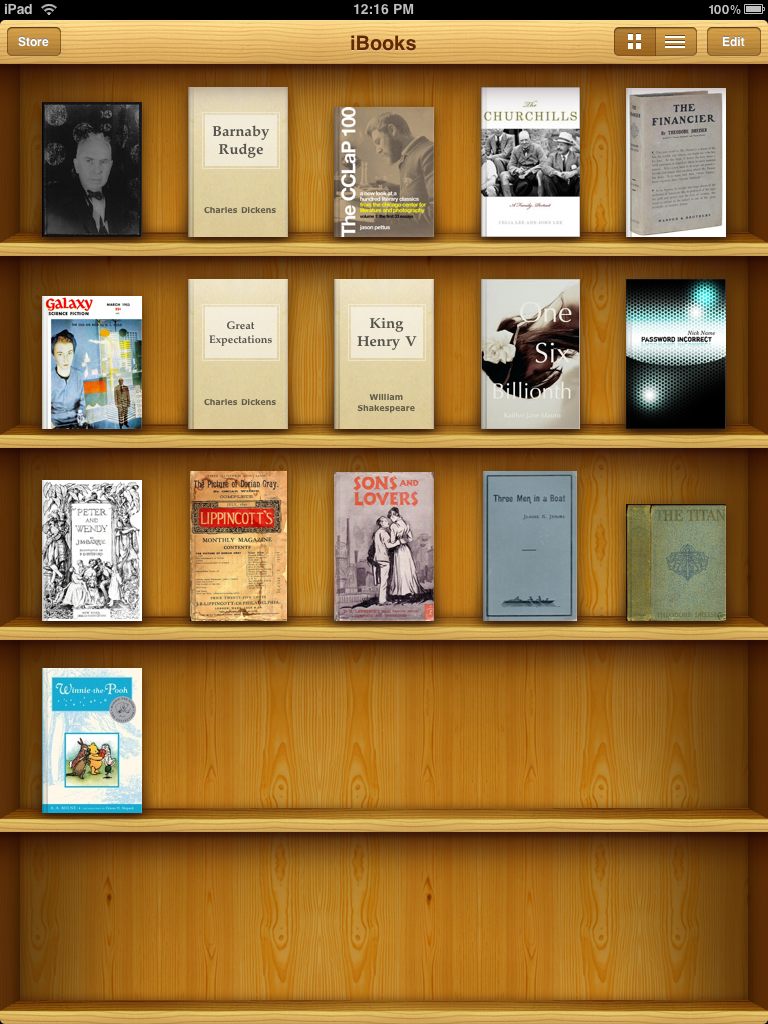
Electronic Bookshelf (from Apple's iBooks)
            Times change, and even if it does there are some common cultural activities that we will forever enjoy, reading, one of those activities, has changed a lot since the first book was written, but it has changed for good. With almost no space to occupy, weightless and highly featured, eBooks are for sure the big change readers were waiting for. But eBooks also assure us a healthier enviroment and  some other commodities that would be impossible for books to provide, commodities such as online shopping and the exclusion of waiting lines, or even easier, we woudnt have to worry about if a book we are interested in will be sold out or not! But that's not all! As technology increases so will advance eBooks, making them each time better and better. The time to change the way we read has come, and the change is so far, so good.

domingo, 13 de marzo de 2011

Análisis sobre un gran tipo de relación humana: La Amistad.

      Como estudiantes y hombres de ciencia, la complejidad de los fenómenos físicos, químicos y/o biológicos que ocurren en nuestro alrededor se van haciendo cada vez más comprensibles para nuestro intelecto. Fenómenos como aquellos producidos por la fuerza de una superficie a un cuerpo, o de otros tipos como el funcionamiento de capacitores, bobinas y transformadores eléctricos nos son explicados con un gran y necesario énfasis. Lo cierto es que, muchas veces no tenemos en cuenta, o simplemente no nos hace falta comprender, la gran e increíble complejidad que existe en las relaciones humanas. En este artículo me tomaré la libertad de hablar sobre la amistad, y no aquella cual tenemos con nuestros compañeros de diario o con familiares directos que apenas conocemos, sino de aquella la cual encontramos pocas veces en nuestras vidas, aquellas por las que vale la pena luchar.

      Obviamente, no existe formula matemática que podamos aplicar para encontrar un amigo. Y no es sólo por el hecho de que existen billones de personas en nuestro planeta, sino también porque la amistad verdadera surge espontáneamente, ya que por consecuencia, la amistad no debe surgir por interés personal, sino por empatía, similitud en maneras de pensar y actuar, actividades de interés común y síntomas de reciprocidad.

      En realidad, no poseo una visión común en lo que se refiere a una definición exacta de lo que es la amistad, por lo que todo lo dicho y todo lo que sé dirá en este artículo, podría cambiar con la perspectiva de cada quien. (Hace unos días leí en un artículo el cual lamentablemente perdí la fuente, que las relaciones humanas como la amistad ocurrían por cierta similitud de ciertos cromosomas en el genotipo de cada individuo, además, otros estudios señalan que la cantidad de feromonas que emitimos a diario juegan un gran factor en nuestro alrededor). Luego de un pequeño paréntesis, cabe resaltar que hasta aquí queda la parte científica del artículo, todo lo siguiente estará tomado de algo que el Método Científico llamaría Experimentación, realizada por mí, a través de la parte consiente de mi vida.

      Un amigo, a mis tempranas conclusiones, es aquel que tiene interés (para nada sexual o romántico) de estar con su amigo correspondiente. Un amigo de verdad, busca siempre a su otro amigo, en momentos de gloria, felicidad o desesperación siempre sé buscan el uno al otro, porque como dije anteriormente, debe existir un grado de similitud en la forma de pensar de los involucrados en la relación humana. Después de todo, queremos de amigo una persona que piense como nosotros, así no solo existiría un grado de empatía, sino también existiría alguien que nos apoyara en cosas que nosotros lo apoyaríamos.

      Además de buscarse el uno al otro, y de tener personalidades similares, me he dado cuenta que existe un grado de confianza o intimidad más elevado entre amigos. Este grado es por supuesto menor que el que existe entre esposos, pero mayor que el que una persona tiene con el resto del mundo. La confianza puede representarse de diferentes maneras, puede variar desde juegos de manos (golpes leves y siempre inofensivos), abrazos, palmadas en la espalda y otros. Acciones que sin lugar a dudas nos molestaría recibir de una persona no allegada a nosotros (creando así una preferencia NO injusta contra los demás).La confianza también existe de manera emocional, amigos suelen contarse cosas las cuales no discutirían frente a otros.

      Muchas veces la amistad surge por un grado de admiración  entre los individuos. La admiración  sé ve sujeta a una característica en específica que no tenemos, pero que sin lugar a dudas queremos poseer. Pensamientos tales como estos muchas veces nos hacen querer conocer a fondo cierta persona, y al hacer esto, nos vamos relacionando cada vez más con esa persona. Surgen preferencias, y de pronto amigos surgen de la nada.

      Para finalizar con un pequeño resumen, un amigo es aquel que desea compartir contigo, que te busca y en cierto grado te admira. No existe atracción sexual alguna, pero si existe un cierto nivel de confianza, más emocional que físico. La empatía siempre estará presente en una amistad verdadera, ya que esta es responsable, en cierto nivel, de querer velar por el bienestar de nuestro amigo. 

      Ahora resultaría oportuno comentar sobre la gran importancia de la amistad en nuestra vida diaria, pero a aquellas personas que han encontrado un amigo verdadero sólo les cuesta pensar de que manera cambiaría su mundo si algo le fuese a suceder a esa persona a la cual consideran su amigo verdadero. La amistad no necesariamente nos hace vivir en un mundo mejor, pero si nos hace vivir una vida mucho, mucho más fácil de lidiar.

jueves, 10 de marzo de 2011

As simple as Engineering wants it to be...

            As many of us live our daily life, worrying about our jobs, classes,  projects, issues and money, there's one common emotion that make us get to the end of the day: The feeling of going back home. But, what would our homes be if they were only a structural building with no items at all...? Most of the time we do not wonder how the stuff that make our lives comfortable got there, how were they produced, the reason of why they're designed a certain way and the amazingly high amount of thought behind the creation of each item. But, is that actually a bad thing? Well it's not! After all, the feeling of ‘going back home' is indeed supposed to be refreshing and relaxing , and that's exactly how industrial designers (those responsible of creating such items) wanted us to feel. Now let's stop for a little while and do wonder how different items like spoons, toothpicks or even chairs got into our homes, from the very beginning of the idea to the design process and through the manufacture of the items.

            It all starts with an idea. It could be from a man, a woman, a kid, a lawyer or an engineer...it all starts with an idea. A source of inspiration, a ''click'' in our brains... an idea is a conception, something that still doesn't exist in the physical world but does exist inside of us... in our imagination. Every item in our homes, from knives to forks, from doorknobs to keys...they all were ideas once! Before they could become physical they had to be imagined, created inside someone's brain. Let it be for necessity or for recreation, an idea is an idea, and even though ideas are subjective, is thanks to these imaginary acts that we live in this wonderful, modern world. And...what happens next? Does the idea transform itself from our imaginations to reality in a magical way? It's a clear answer that this isn't the case, in fact most of the work behind the creation of not just a household item, but every kind of item starts here, with the Design Process.

            Designing, from the most complex to the simplest definition, to design is ''to convert an idea to something that we could touch, something tangible''. Even though this one of the best definitions of the verb ''Design'' itself, we must take a breath and really make emphasis in the weight of each of those words. From the definition we can then say that to design is ''to convert our subjective and intimate imagination to a shared reality''. So here it is the tool that brought us forks, plates, tables, decorations, TVs and DVDs...but even though we can all get an idea, we cannot, in the other hand, design every idea we have. We would need a specialist, someone capable of designing really complex stuff like a stove that has an integrated radio or a freezer with a TV inside...we would need an Industrial Designer. Most of the time an Engineer, the Industrial Designer is the being who not only understands but dominates all the techniques involved in the production of an item. The designer must know about materials and their durability, construction, aesthetics, price reduction...And even though there are different kinds of Industrial Designers (from Mechanical to Electronics) they all share a common bond: They can convert our imagination into reality.

            We now know two major facts about our household items: Each and every one of them was once in someone's mind (as an idea) and we also know that there's actually a specialist who was responsible of converting that idea into reality (the industrial designer). But... how does it happen? As every item has a different construction process let's take a spoon, just to set an example of the process of design. First, the Industrial Designer must investigate the use that will be given to the spoon, will it be for coffee? For soup? Then he should decide on the material the spoon will be constructed of, taking in consideration durability, metal flexibility and price. He then must investigate a little about the anatomy of the human hand, so the grip of the spoon is confortable to the user. Then the designer proceeds to draw the spoon as a Technical Drawing, a drawing with all the measures and angles of the spoon defined, the different views of it, the shape, the materials and everything aesthetic about it. With the drawing the designer should also provide his calculations about the heating of the metal the spoon will be constructed of, what kind of mold should be used to construct the metal and every other specifications important to the construction of the spoon. Finally, a technician gets the Drawing and Specifications sheets and constructs the spoon.

            If that was just a spoon imagine the amount of work behind a TV or a stove. Even though our home may feel as the most relaxing and simplest place on earth, we now can't deny that is also a place filled with amazingly designed items that were once just the idea of someone's imagination. Can we even wonder how or lives would be if some (or even just one) of these items were never designed? Imagine a world without chairs or doorknobs or...spoons and forks! The items we all use, as simple as they may look were once a challenge to the designers responsible of their creation, designers who calculated angles, fusion heat, material durability and even took in consideration shape, colors and price. They all deserve our gratitude, as thanks to them our home is the place we all want to go at the end of the day.