As many of us live our daily life, worrying about our jobs, classes, projects, issues and money, there's one common emotion that make us get to the end of the day: The feeling of going back home. But, what would our homes be if they were only a structural building with no items at all...? Most of the time we do not wonder how the stuff that make our lives comfortable got there, how were they produced, the reason of why they're designed a certain way and the amazingly high amount of thought behind the creation of each item. But, is that actually a bad thing? Well it's not! After all, the feeling of ‘going back home' is indeed supposed to be refreshing and relaxing , and that's exactly how industrial designers (those responsible of creating such items) wanted us to feel. Now let's stop for a little while and do wonder how different items like spoons, toothpicks or even chairs got into our homes, from the very beginning of the idea to the design process and through the manufacture of the items.
 It all starts with an idea. It could be from a man, a woman, a kid, a lawyer or an engineer...it all starts with an idea. A source of inspiration, a ''click'' in our brains... an idea is a conception, something that still doesn't exist in the physical world but does exist inside of us... in our imagination. Every item in our homes, from knives to forks, from doorknobs to keys...they all were ideas once! Before they could become physical they had to be imagined, created inside someone's brain. Let it be for necessity or for recreation, an idea is an idea, and even though ideas are subjective, is thanks to these imaginary acts that we live in this wonderful, modern world. And...what happens next? Does the idea transform itself from our imaginations to reality in a magical way? It's a clear answer that this isn't the case, in fact most of the work behind the creation of not just a household item, but every kind of item starts here, with the Design Process.
 Designing, from the most complex to the simplest definition, to design is ''to convert an idea to something that we could touch, something tangible''. Even though this one of the best definitions of the verb ''Design'' itself, we must take a breath and really make emphasis in the weight of each of those words. From the definition we can then say that to design is ''to convert our subjective and intimate imagination to a shared reality''. So here it is the tool that brought us forks, plates, tables, decorations, TVs and DVDs...but even though we can all get an idea, we cannot, in the other hand, design every idea we have. We would need a specialist, someone capable of designing really complex stuff like a stove that has an integrated radio or a freezer with a TV inside...we would need an Industrial Designer. Most of the time an Engineer, the Industrial Designer is the being who not only understands but dominates all the techniques involved in the production of an item. The designer must know about materials and their durability, construction, aesthetics, price reduction...And even though there are different kinds of Industrial Designers (from Mechanical to Electronics) they all share a common bond: They can convert our imagination into reality.
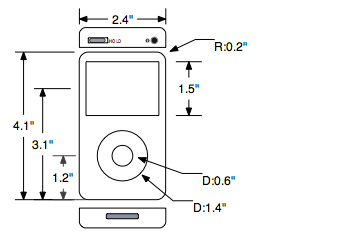
We now know two major facts about our household items: Each and every one of them was once in someone's mind (as an idea) and we also know that there's actually a specialist who was responsible of converting that idea into reality (the industrial designer). But... how does it happen? As every item has a different construction process let's take a spoon, just to set an example of the process of design. First, the Industrial Designer must investigate the use that will be given to the spoon, will it be for coffee? For soup? Then he should decide on the material the spoon will be constructed of, taking in consideration durability, metal flexibility and price. He then must investigate a little about the anatomy of the human hand, so the grip of the spoon is confortable to the user. Then the designer proceeds to draw the spoon as a Technical Drawing, a drawing with all the measures and angles of the spoon defined, the different views of it, the shape, the materials and everything aesthetic about it. With the drawing the designer should also provide his calculations about the heating of the metal the spoon will be constructed of, what kind of mold should be used to construct the metal and every other specifications important to the construction of the spoon. Finally, a technician gets the Drawing and Specifications sheets and constructs the spoon.
If that was just a spoon imagine the amount of work behind a TV or a stove. Even though our home may feel as the most relaxing and simplest place on earth, we now can't deny that is also a place filled with amazingly designed items that were once just the idea of someone's imagination. Can we even wonder how or lives would be if some (or even just one) of these items were never designed? Imagine a world without chairs or doorknobs or...spoons and forks! The items we all use, as simple as they may look were once a challenge to the designers responsible of their creation, designers who calculated angles, fusion heat, material durability and even took in consideration shape, colors and price. They all deserve our gratitude, as thanks to them our home is the place we all want to go at the end of the day.

No hay comentarios:
Publicar un comentario